

If you’ve placed a bet online in the last few years, you’ve probably noticed the mood shifting. Louder debates about pokies, endless ads during the footy, and growing pressure on Canberra to do something about it. Well, something has finally been done. The Interactive Gambling Amendment (Gambling Reform) Act 2026 received Royal Assent on 26 August 2026, and most of its substantive provisions switch on from 1 January 2027. For Australian punters and casino players, that means a genuinely different landscape from New Year’s Day.
Here’s a plain-English breakdown of what’s coming, why it matters, and how it affects the way you play.
The Big Picture: Why Australia Is Rewriting the Rulebook
The reform package is Canberra’s formal response to the parliamentary inquiry led by the late Peta Murphy, whose 2023 report “You win some, you lose more” made 31 recommendations after gathering 161 submissions and holding 13 public hearings. Australians lose roughly $25 billion to gambling every year, the highest per-adult figure in the world, and successive governments have been under pressure to address advertising saturation, aggressive inducements, and gaps in self-exclusion tools.
The new law doesn’t ban online gambling. It doesn’t even ban advertising outright. What it does is restructure the space around three main goals: reducing exposure for kids and at-risk users, tightening the leash on operator marketing, and giving players stronger opt-out and self-exclusion tools.
When Do the New Rules Actually Start?
Timing matters here because operators and platforms have been shifting behaviour ahead of the deadline. Most of the substantive reforms commence on 1 January 2027, while procedural provisions kicked in when the Act received Royal Assent on 26 August 2026.
| Milestone | Date | What It Means |
|---|---|---|
| Bill passed Parliament | 19 August 2026 | Reforms locked in politically |
| Royal Assent | 26 August 2026 | Procedural and transitional provisions active |
| Substantive reforms commence | 1 January 2027 | Advertising limits, opt-out register, BetStop upgrades take effect |
| Ongoing rollout | 2027 onward | ACMA guidance, cost recovery levy, compliance reviews |
If you already hold an account with a licensed Australian wagering operator, nothing about the account itself changes overnight. What changes is the environment around it.
Advertising Restrictions: A Quieter Sports Weekend
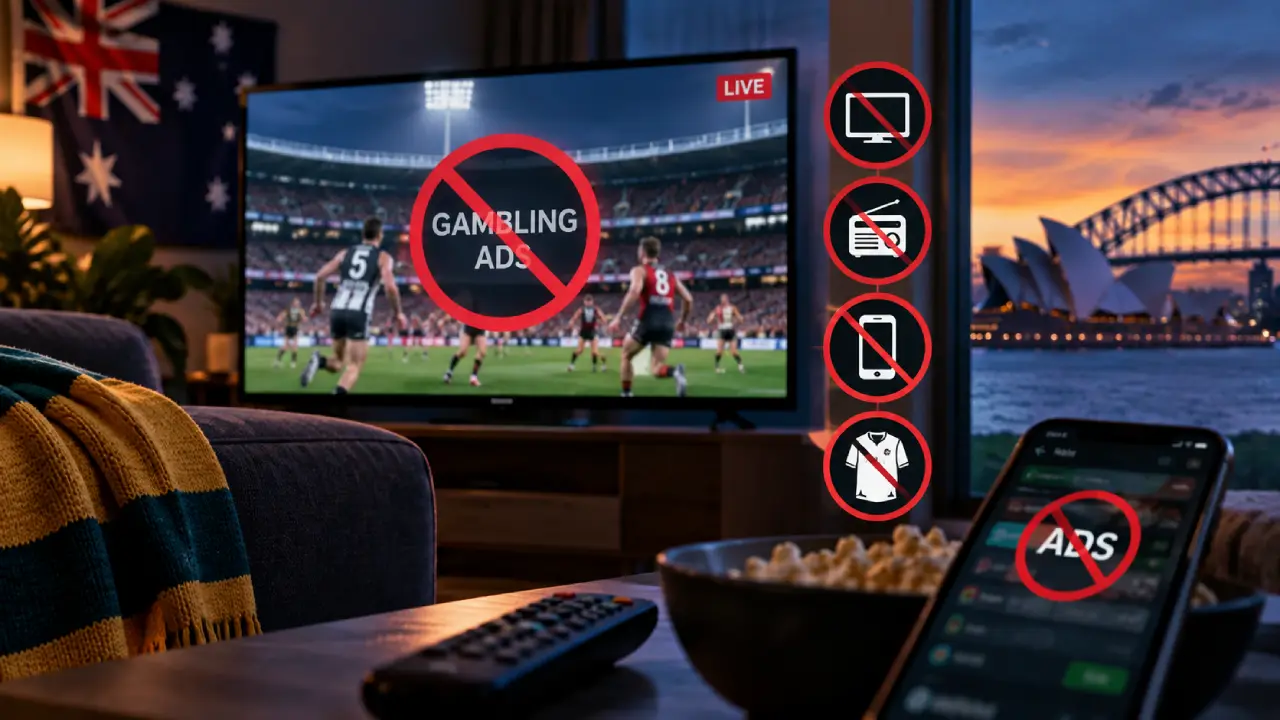
The most visible shift for everyday Australians will be around advertising. If you’ve ever complained about being carpet-bombed with odds during a live NRL or AFL broadcast, you’re the target audience for this one.
From January 2027, television broadcasters will be capped at three gambling advertisements per hour between 6am and 8.30pm, with a full blackout during live sport in those hours. Sports venues can no longer carry wagering ads, and players’ and officials’ uniforms are off-limits too. Existing sponsorship deals get to run out their contracted terms before enforcement bites.
Radio faces its own restrictions during school drop-off and pick-up windows, and there’s a blanket ban on using athletes, celebrities or influencers to promote wagering. Digital platforms will only be able to serve gambling ads to logged-in users who are verified as 18 or over, with an opt-out available.
TV, Radio and Digital Platforms
Here’s a side-by-side of where the ads can and can’t appear once the rules take effect:
| Channel | New Restriction from 1 January 2027 |
|---|---|
| Free-to-air and subscription TV | Max 3 ads per hour 6am–8.30pm; total ban during live sport in that window |
| Radio | No ads during school drop-off and pick-up periods |
| Digital platforms | Only to logged-in, age-verified adults with opt-out option |
| Sports venues | Full ban on ground signage and player uniforms |
| Sponsorships | Celebrity, athlete and influencer endorsements banned |
None of this stops you from betting. It just means the ad-driven pull that used to come at you through the TV, radio and social feeds gets a lot quieter.
The New Wagering Advertising Opt-Out Register
One of the more interesting additions to the package is the Wagering Advertising Opt-out Register, introduced through an amendment tabled by Communications Minister Anika Wells in August 2026. Administered by the ACMA, it’s designed as a single national mechanism to opt out of wagering ads across participating online services, rather than having to fiddle with settings on every individual platform.
Think of it as a “do not market” list for gambling. Sign up once, and participating platforms are required to stop serving you wagering ads. The register will be funded by a levy on licensed wagering operators, not taxpayers. It’s not clear yet whether the register will be fully operational on day one of the new regime, but it’s the framework Canberra is building around.
Changes to BetStop and Self-Exclusion Protections
BetStop, the National Self-Exclusion Register, launched in August 2023 and has already helped thousands of Australians step back from wagering. The 2026 Act strengthens it in several ways. Some existing loopholes, including cases where self-excluded users still managed to place bets, are being closed through tighter operator obligations and a companion Cost Recovery Levy Act that funds ACMA’s enforcement work.
The core mechanics of BetStop stay the same: you register with a mobile number, email and either an Australian driver’s licence or Medicare card, and you’re excluded from all roughly 150 licensed Australian wagering providers for anywhere between three months and a lifetime. You can nominate up to five support people to help you through the process. What changes in 2027 is the strength of the enforcement framework sitting behind it, along with tougher penalties for operators that let self-excluded users slip through the cracks.
Inducements, Bonuses and Direct Marketing
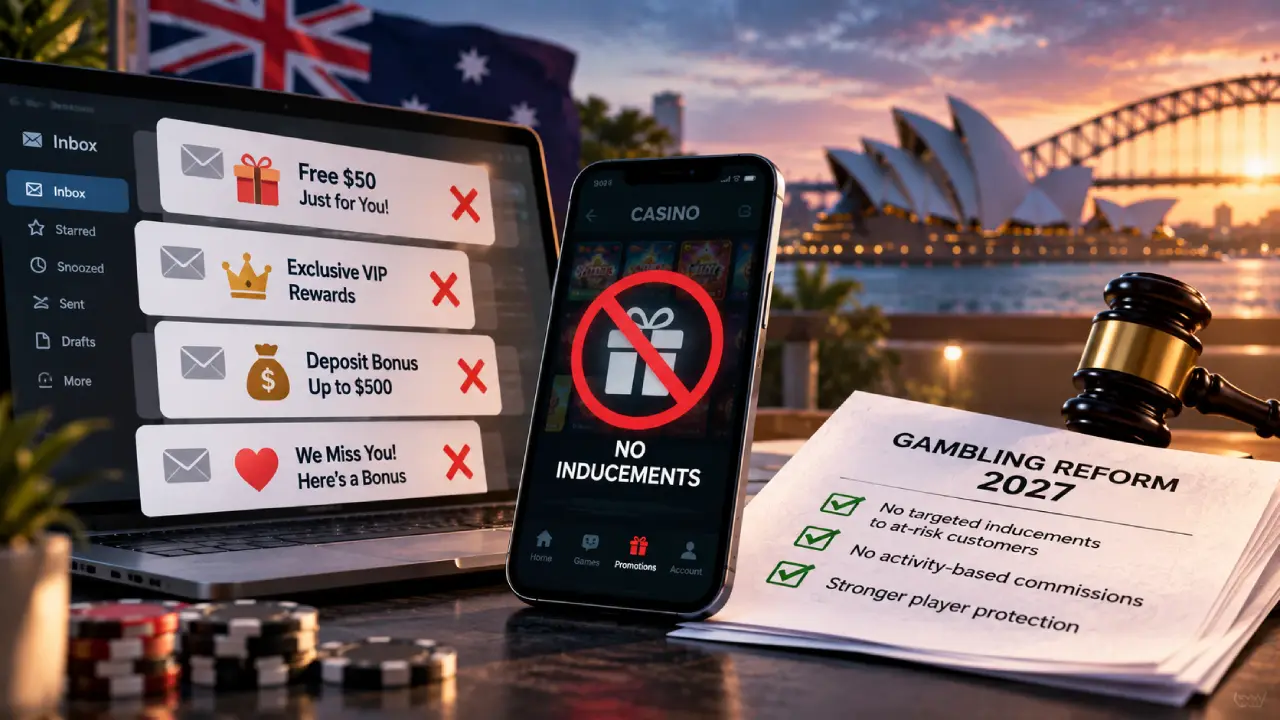
This is where the 2027 changes will most directly affect the day-to-day experience of Australian wagering account holders. Direct marketing of inducements to at-risk customers is banned outright. Customer-activity-based commissions for staff and affiliates, essentially the pay structures that reward pushing users to bet more, are also prohibited.
For punters, that means fewer “here’s a free $50 to come back” emails when you’ve just gone through a rough losing patch, and fewer VIP-style incentive schemes that ramp up when your activity spikes. Standard sign-up offers and generic promotions aren’t disappearing, but the aggressive, personalised nudge is being reined in.
Civil penalties for breaches sit between 1,000 and 5,000 penalty units per contravention, which at current rates translates to fines of up to roughly $1.82 million per breach for most prohibitions. That’s a serious lever for compliance.
Online Keno, Lotteries and Illegal Operators
The Act also addresses harmful and emerging online lottery products. Online keno gets a complete ban, along with foreign matched lotteries, which are products that mirror overseas draws through Australian intermediaries. Traditional state-licensed lotteries and scratchies remain unaffected.
On enforcement, the government is boosting ACMA’s tools to disrupt illegal gambling services, meaning offshore operators targeting Australians without a licence face stronger blocking and referral mechanisms. This has been an ongoing headache because the Interactive Gambling Act 2001 already made offering online casino games to people in Australia illegal for operators, but enforcement against overseas sites has been patchy.
What This Means for Australian Online Players
Let’s be honest about what this reform is and isn’t. It’s not a nanny-state clampdown that stops you from betting. Legal sports and racing wagering with an Australian-licensed operator continues exactly as before. Recreational winnings still aren’t taxed as income for individuals. You can still deposit via debit cards, PayID, bank transfers, and e-wallets, though credit card and digital-currency deposits at licensed operators have been banned since June 2024.
Here’s a quick summary of what practically changes and what doesn’t:
| Aspect | Before 2027 | From 1 January 2027 |
|---|---|---|
| Placing bets on sport and racing | Legal with licensed operators | Legal with licensed operators |
| Online casino games from Australian operators | Prohibited | Prohibited |
| Gambling ads during live sport | Widespread | Banned within 6am–8.30pm window |
| Ad opt-out | Platform by platform | Single national opt-out register |
| Inducement marketing to at-risk users | Loosely restricted | Direct ban |
| Online keno | Available | Banned |
| Self-exclusion via BetStop | Available | Strengthened with better enforcement |
| Celebrity-fronted gambling ads | Common | Banned |
For the average recreational punter, the biggest day-to-day differences will be a quieter media environment, less inbox spam if you tick the opt-out box, and a wagering industry that has to actually respect self-exclusion decisions or wear serious fines.
How to Stay Safe and Informed as the Rules Bed In
Change breeds confusion, and dodgy operators love confusion. In the months either side of 1 January 2027, expect to see a lot of noise from offshore sites trying to convince Australians that “the new laws mean X” or “we’re the only ones offering Y now.” Most of that will be nonsense, and some of it will be a lure into unlicensed platforms with zero consumer protections.
If you’re going to play, the two rules that carry you through any regulatory shake-up are the same they’ve always been. First, know who you’re playing with. Second, know what protections you actually get. Independent, up-to-date resources like these Australia casino reviews are useful because they cut through operator marketing and lay out licensing, payment options, withdrawal times, dispute processes and responsible-play tools in one place. For Australian players in particular, that kind of side-by-side comparison saves you from wasting deposits on sites that turn out to be slow with payouts, opaque about bonus terms, or missing the consumer-protection features you’d expect.